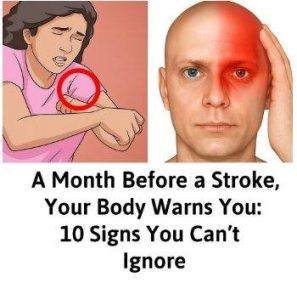
A Month Before a Stroke, Your Body Warns You: 10 Signs Not to Ignore
A stroke is one of the leading causes of death and long-term disability worldwide. It often strikes suddenly, but in many cases, the body begins sending subtle warning signs days or even weeks in advance. Recognizing these early signals can make the difference between life and death—or between full recovery and permanent damage.
Understanding what your body is trying to tell you is crucial. Below are 10 warning signs that may appear up to a month before a stroke and should never be ignored.
1. Sudden Weakness or Numbness
One of the earliest and most common warning signs is sudden weakness or numbness, especially on one side of the body. This may affect your face, arm, or leg. You might notice difficulty holding objects, walking, or even smiling evenly.
This symptom occurs because blood flow to certain parts of the brain is temporarily disrupted, affecting muscle control.
2. Frequent Headaches
Recurring or unusually severe headaches can signal an underlying issue with blood vessels in the brain. While headaches are common, those linked to stroke tend to feel different—more intense, sudden, or persistent.
If you experience headaches along with dizziness or visual changes, it’s important to seek medical advice.
3. Vision Problems
Blurred vision, double vision, or temporary loss of sight in one or both eyes can be an early warning sign. These symptoms occur when the brain areas responsible for vision are affected.
Many people ignore vision issues, assuming they are related to eye strain, but sudden changes should never be overlooked.
4. Difficulty Speaking or Understanding Speech
Struggling to find the right words, slurred speech, or difficulty understanding others may indicate that the brain’s language centers are under stress.
This symptom is often associated with a transient ischemic attack, which is a temporary blockage of blood flow and a major warning sign of a future stroke.
5. Dizziness and Loss of Balance
Feeling dizzy, unsteady, or losing coordination can signal problems in the brain’s balance centers. You might experience difficulty walking straight or maintaining posture.
This is especially concerning if it appears suddenly and without an obvious cause.
6. Sudden Fatigue or Weakness
Unusual and unexplained fatigue, especially in women, has been reported as an early symptom. This fatigue may feel overwhelming and not related to physical exertion.
It may be your body’s response to reduced oxygen supply to the brain.
7. Facial Drooping
A drooping or uneven smile is a classic warning sign. One side of the face may feel numb or appear to sag.
A simple test is to look in the mirror and smile—if one side doesn’t move properly, it could indicate a serious issue requiring immediate attention.
8. Nausea or Vomiting
Although less commonly discussed, sudden nausea or vomiting can occur before a stroke, particularly if it’s related to increased pressure in the brain.
When combined with other symptoms like dizziness or headache, this becomes more concerning.
9. Shortness of Breath or Chest Pain
In some cases, stroke warning signs may overlap with cardiovascular symptoms. Shortness of breath, irregular heartbeat, or chest discomfort may indicate underlying issues that could lead to a stroke.
These symptoms should always be evaluated promptly, as they may also signal heart-related conditions.
10. Sudden Confusion or Memory Problems
If you suddenly feel confused, disoriented, or have trouble remembering things, it could be due to reduced blood flow to the brain.
This may manifest as difficulty concentrating, forgetting simple tasks, or feeling mentally “foggy.”
Why Early Warning Signs Matter
Many of these symptoms are linked to a transient ischemic attack, often called a “mini-stroke.” While the symptoms may disappear within minutes or hours, they are a serious warning that a full stroke could occur soon—sometimes within days or weeks.
Ignoring these early signs significantly increases the risk of severe brain damage.
What to Do If You Notice These Signs
If you or someone around you experiences any of these symptoms, act immediately. Time is critical when dealing with a stroke. Even if symptoms go away, medical evaluation is essential.
A simple way to remember key stroke symptoms is the FAST method:
- F – Face: Is one side drooping?
- A – Arms: Is there weakness in one arm?
- S – Speech: Is speech slurred or strange?
- T – Time: Seek emergency help immediately
Prevention Tips
While not all strokes can be prevented, you can significantly reduce your risk by maintaining a healthy lifestyle:
- Keep blood pressure under control
- Manage diabetes and cholesterol levels
- Avoid smoking and limit alcohol intake
- Exercise regularly
- Eat a balanced diet rich in fruits and vegetables
Regular health checkups can also help detect risk factors early.
Final Thoughts
A stroke rarely comes without warning. Your body often sends signals—sometimes subtle, sometimes obvious—that something is wrong. Paying attention to these signs and acting quickly can save your life or the life of someone you love.
Never ignore unusual symptoms, even if they seem minor or temporary. When it comes to stroke, early detection and timely action are the most powerful tools you have.